Birders are fascinated by species that occur in very limited numbers or can be found in only a very small region or in a very specific type of habitat. In fact some birders go to great lengths and travel huge distances to see very rare birds, which are highly-prized additions to their ‘life list’. We’ve been very fortunate over the years to encounter some very rare birds that skilled guides have led us to on organised trips. On this page we show some examples of these species.
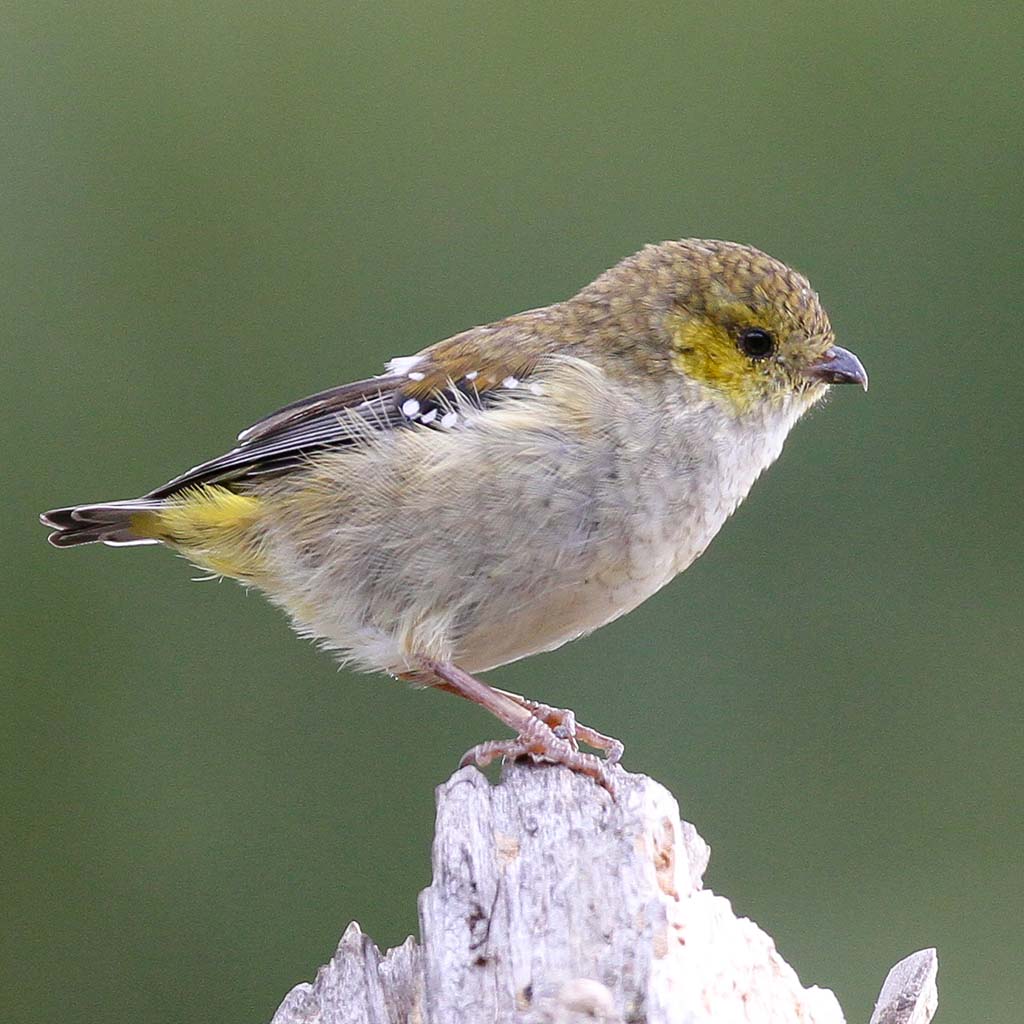
The endangered Forty-spotted Pardalope is endemic to Australia and has an extremely limited range, being found only in the southeastern part of Tasmania and mainly on Maria and Bruny Islands. It is one of Australia’s rarest birds and its rarity is mainly a result of it only feeding on white gum trees in dry eucalypt forests. I was fortunate to be able to photograph this species while on Bruny Island in March 2014.
Forty-spotted Pardalope
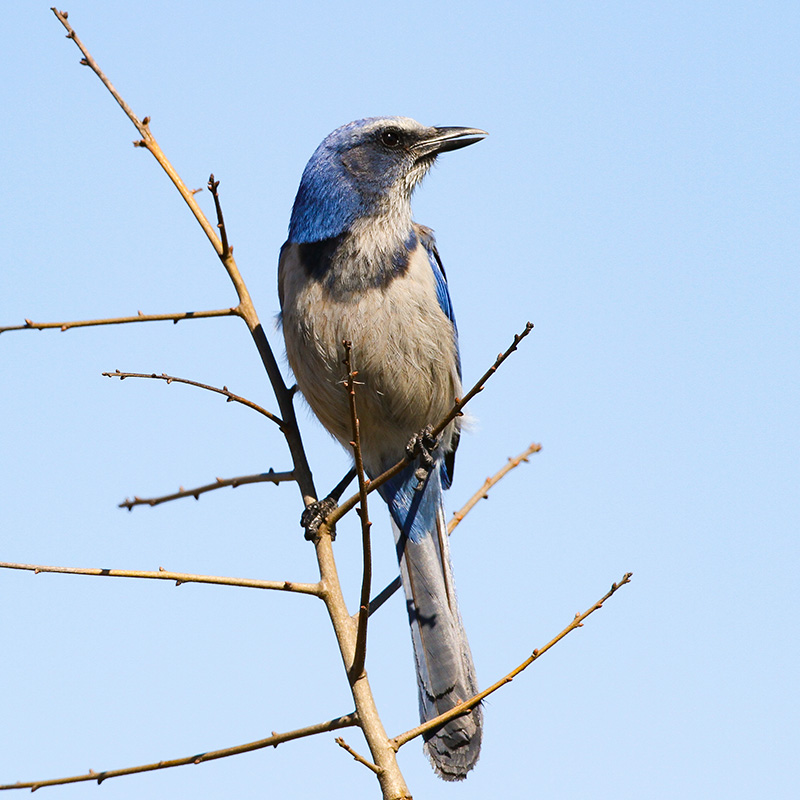
The Florida Scrub-jay is endemic to the state of Florida and one of only 15 endemic species in the continental USA. The live in low-growing oak scrub and are very tame and used to the many birders who come to see them. Only a few thousand are thought to exist today and the Florida Scrub-jay is listed as a threatened species under the US Endangered Species Act.
Florida Scrub-jay. Merrit Island, Florida February 2014
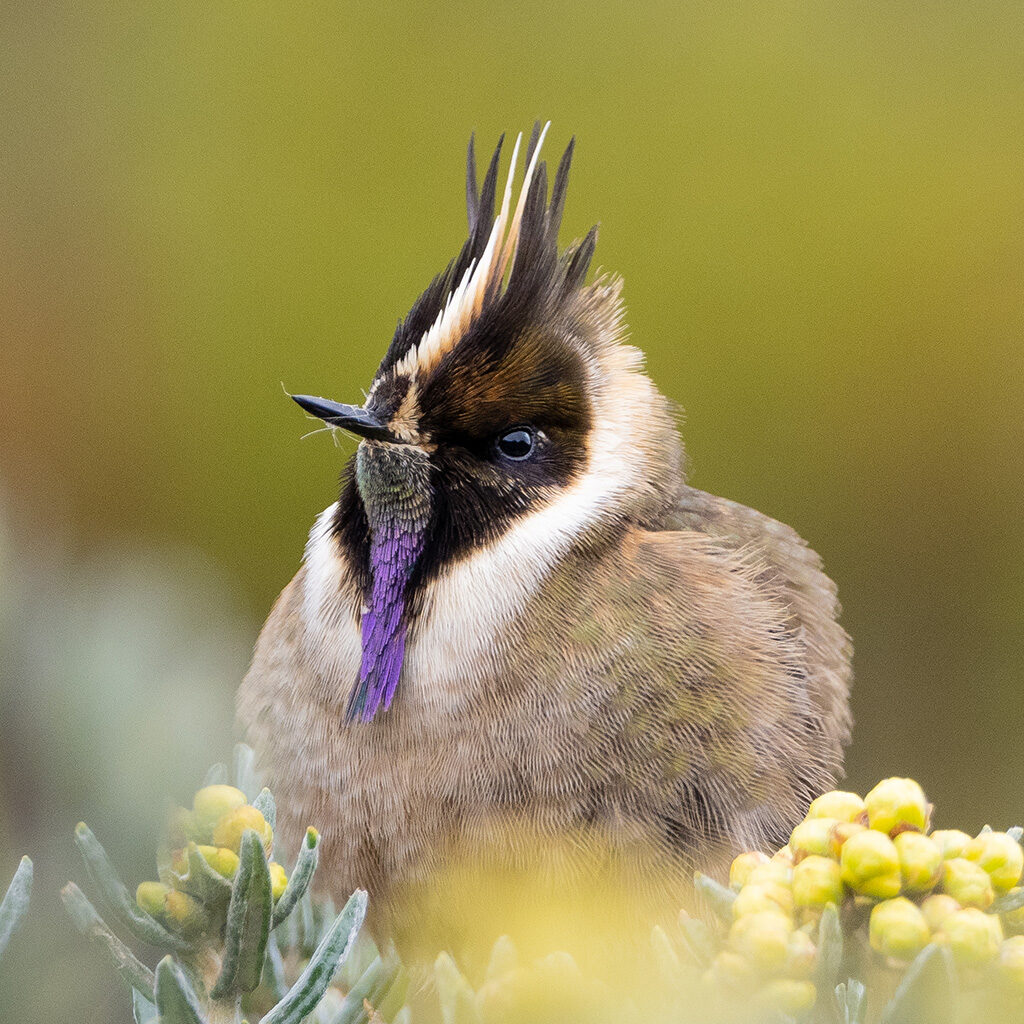
The Buffy Helmetcrest is a species of hummingbird endemic to Colombia and found only on Nevado del Ruiz, an active volcano in the Colombian Central Andes on the border of Tolima and Caldas. We were very fortunate to be able to photograph this bird as it appeared almost immediately after we had parked our vehicle at the visitors centre at the base of the volcano. Once we got our photograph the bird flew off and we never saw it again. For once luck was with us.
Buffy Helmetcrest. Colombia March 2020
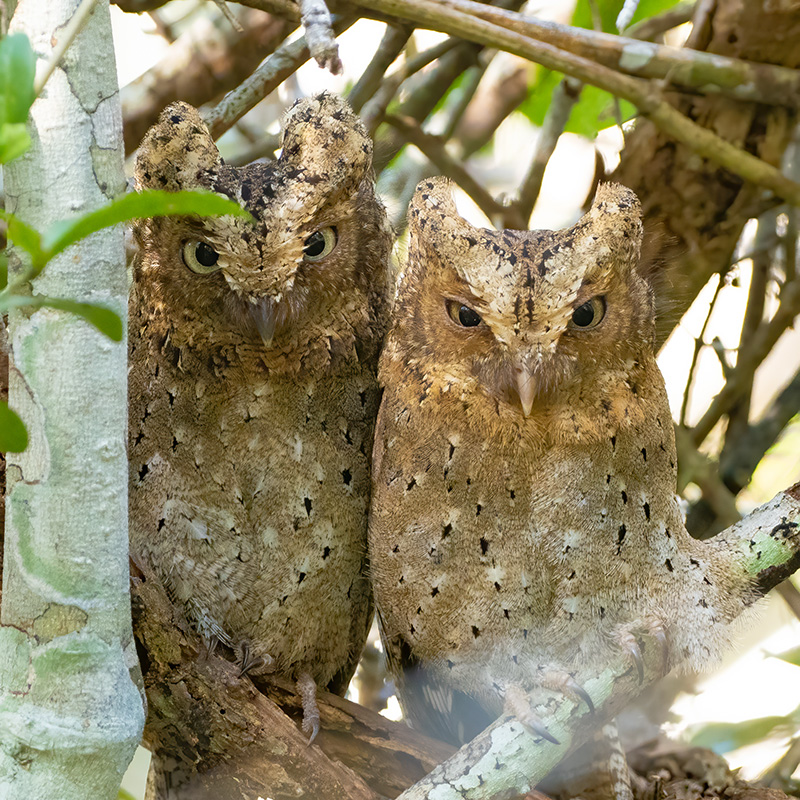
The Sokoke Scops-owl. This is the smallest of the scops owls with a height of only 17 cm and a weight of up to 57 grams. It has an extremely limited range, being found only in the lowland forests of Kenya and Tanzania. When we were staying near the coast of Kenya we were very fortunate to have an excellent local guide who took us to see this pair in the Arabuko Sokoke Forest.
Sokoke Scops-owl. Arabuko Forest, Kenya September 2019
The Serendib Scops-owl was identified comparatively recently, being first seen in 2001 and accepted as a species in 2004. It is endemic to Sri Lanka and found in a few areas of rainforest in the southern part of the island. We photographed the bird in the Sinharaja National Park in February 2025.
Serendib Scops-owl. Sinharaja, Sri Lanka February 2025
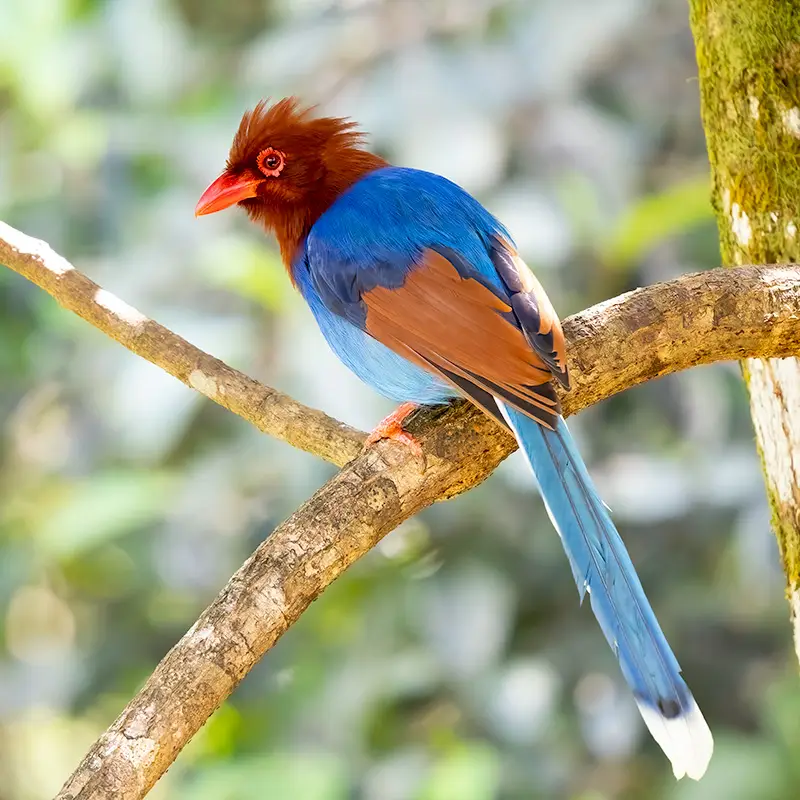
The Sri Lanka Blue-magpie is endemic to the island of Sri Lanka and found in tropical broadleaf evergreen forests, in the wet zone of the southwestern sector of the island. We photographed this example in the Sinharaja Forest.
Sri Lanka Blue-magpie
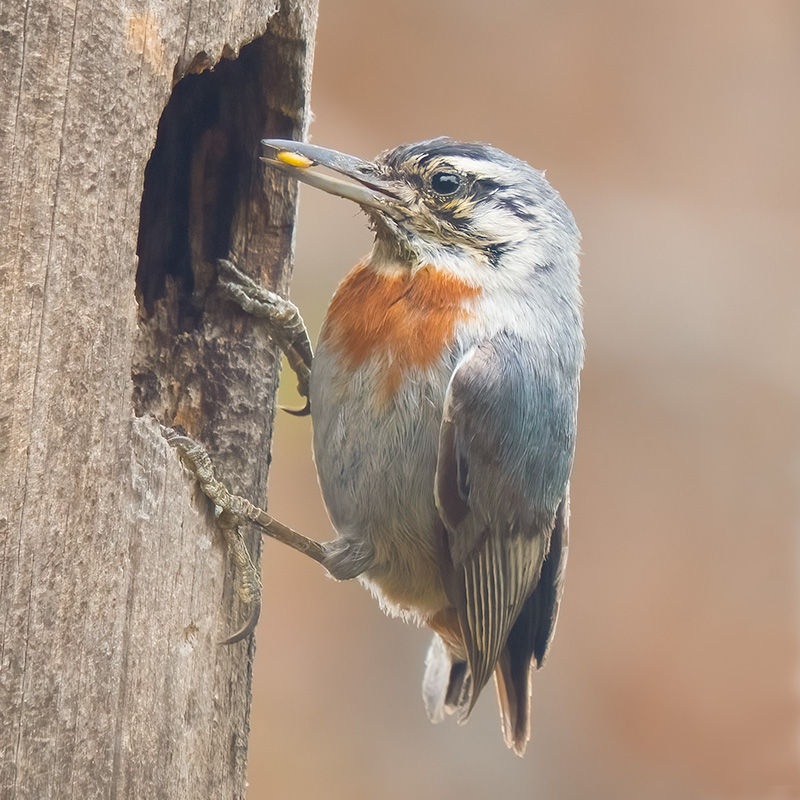
Kruper’s Nuthatch
Kruper's Nuthatch. Achladeri Forest, Lesbos May 2025
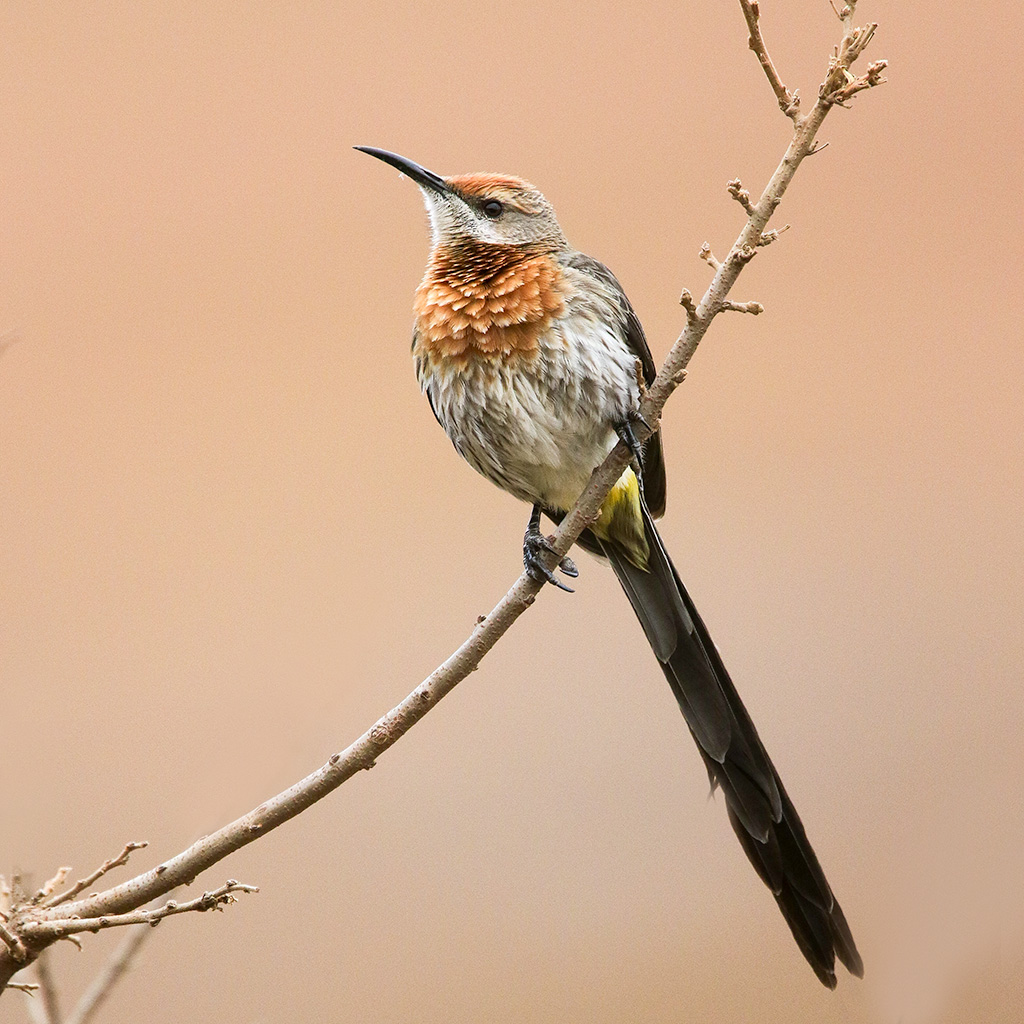
Gurney’s Sugarbird.
Gurney's Sugarbird. Sani Pass, South Africa August 2017
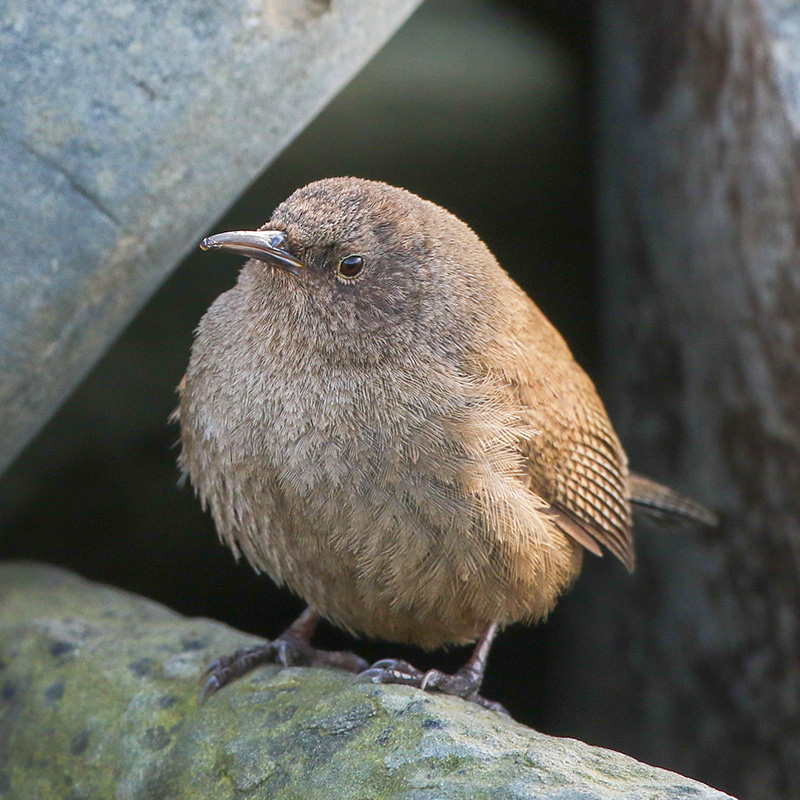
Cobb’s Wren is endemic to the Falkland Ilands and found on only a few isolated rat-free islands. There are fewer than 8,000 pairs but the species is not thought to be threatened. We were fortunate to see this bird when we visited Sea Lion Island in September 2015.
Cobb's Wren. Sea Lion Island, The Falkland Islands September 2015